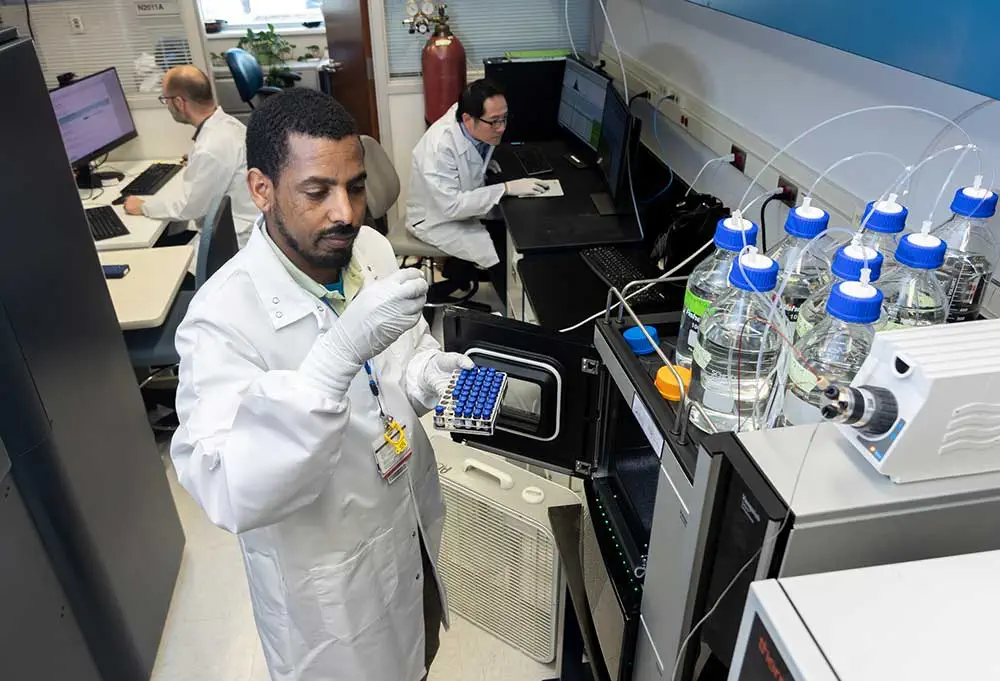
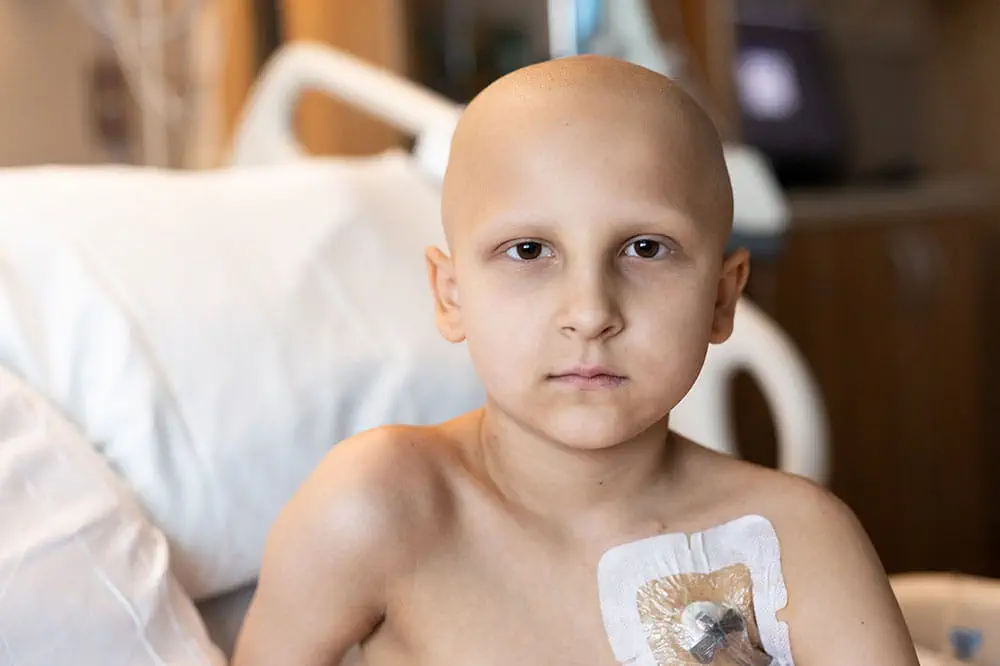
Advances in pediatric medicine begin with a vision for a future in which all children can grow up to be healthy adults. Arkansas Children's Research Institute (ACRI) researchers share this common vision and have devoted their lives to making this vision a reality. At ACRI, children are at the center of everything that we do. Researchers at ACRI are addressing a broad spectrum of children's health concerns, such as the biological mechanisms underlying birth defects; diabetes-related complications; and numerous childhood diseases, including asthma and cancer. Research expertise is diverse, ranging from basic science to clinical and community-based research.
Arkansas Children's Research Institute is a not-for-profit corporation owned by Arkansas Children's, Inc. The Arkansas Children's Hospital Board of Trustees established ACRI in 1989, and ACRI officially opened in May of 1992. The Research Institute Building is located one block south of the main hospital building. ACRI's total research grant base in 1997 was $7.5 million. Today its researchers bring in over $21 million yearly in grants and contracts from federal and private agencies and industry and from philanthropic donations and professional organizations.
At the Arkansas Children's Research Institute (ACRI), we champion children by making them better today and healthier tomorrow.
Our vision is to be on the forefront of innovation in child health and life course research by rapidly transforming discoveries into interventions that define and deliver unprecedented child health.
In support of our vision, we aim to:
We're currently enrolling for a variety of research studies across all ages and demographics.
View Clinical TrialsIf you are unsure of the administrative team member who could best answer your questions, please contact the main office number (501-364-7373), and you will be directed to the appropriate team member.
As part of our efforts to promote academic integrity in science, ACRI has implemented procedures to assure disclosure and appropriate management of all potential conflicts of interest among Academic Staff Members and other research staff operating at ACRI. ACRI's policies and procedures related to financial conflicts of interest assure that the private interests of our researchers and their immediate family members do not improperly influence the design, conduct, or reporting of research. ACRI's researchers are required to disclose financial relationships that can result in a conflict of interest to the ACRI.
Conflicts of interest of ACRI researchers that are related to research funded by the Public Health Service will be made publicly accessible in accordance with 42 C.F.R. Section 50.605.
The Summer Science Program at Arkansas Children's Hospital, a program co-sponsored by the UAMS Department of Pediatrics and the Arkansas Children’s Research Institute, gives outstanding sophomore-, junior-, and senior-level college students the experience of a career in academic medicine—in both the clinical and the research aspects.
Learn moreDownload the Research Guidebook for detailed descriptions of research support services offered by ACRI Research Administration.
Download











 Español
  Cookie Settings
  Accessibility