|
November 2009
Progress in Peanut Allergy Research
 |
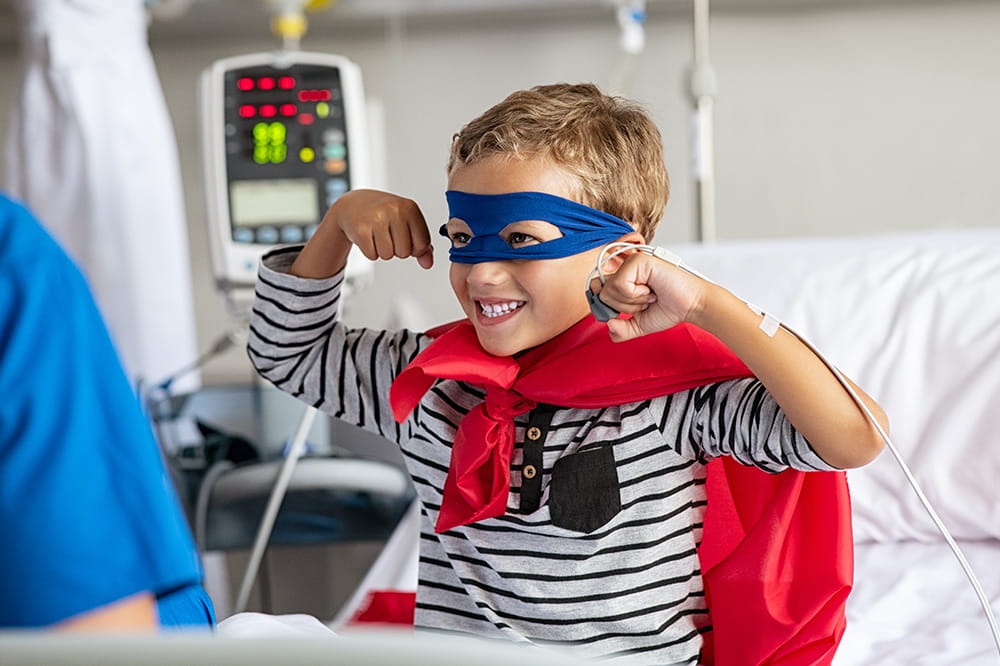
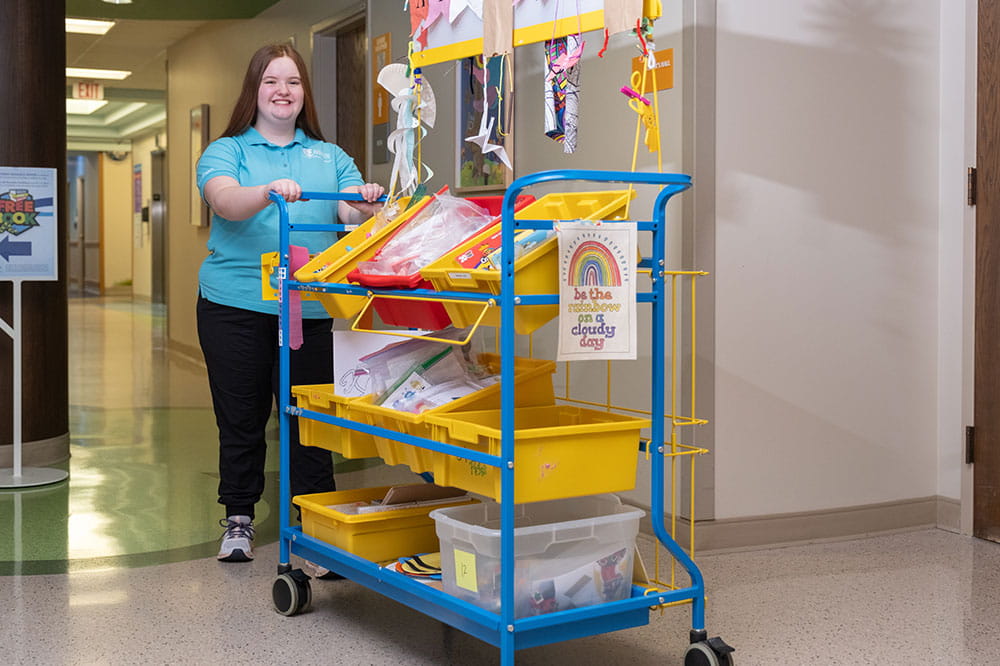
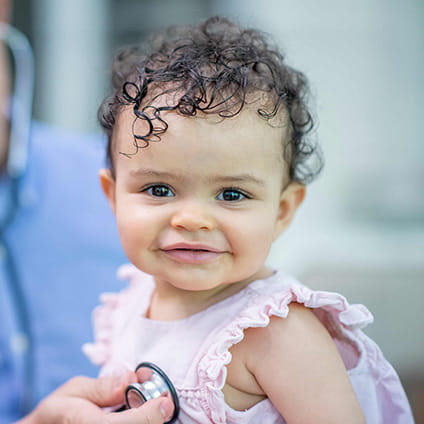
| Enrolled in a peanut allergy study, Alex finds trips to the PCRU to be an adventure. |
Like many parents of children with severe medical concerns, Caren was tracking news of any developments in the treatment of peanut allergies. Her son Alex has a severe peanut allergy, and it has been a very difficult way to live. Inadvertent exposure to peanuts is always a possibility, and the fear of a fatal or near fatal reaction is always present.
Caren’s personal investigations into peanut allergy treatments came across clinical studies occurring at ACH and Duke University. At ACH, Dr. Stacie Jones and colleagues are conducting a variety of food allergy studies. Dr. Wesley Burks of Duke pioneered early food allergy research at ACH and now continues this important work at Duke in collaboration with Dr. Jones’ team.
A friend with a child in an oral immunotherapy trial under the direction of Dr. Jones told Caren about the study. In the study, children are given a minute amount of peanut protein under close supervision. If the child continues with the study after the initial amount, he or she is then given gradually increasing amounts every two weeks with the theory that the child will become less allergic over time.
Caren and her son Alex came to ACHRI’s Pediatric Clinical Research Unit (PCRU) for his initial treatment. Alex was given a tiny amount of peanut protein to start with incrementally building to the full dose to be given on that day. He also had standard blood and allergy skin testing. “On that first day, Alex had a reaction that required an EpiPen,” says Caren, “but we were able to continue in the trial.”
For a year they came to Little Rock every two weeks. At each visit, Alex was given a supervised increased dose at the PCRU. The family returned home with new daily doses to last until the next visit.
After a year of treatment, Alex received a food challenge to determine how much peanut he could tolerate. A year ago Alex had a severe reaction to an amount equal to one-fiftieth of a peanut. Now he could eat a peanut butter sandwich. Alex had no harmful reaction. Caren explains, “He was safe, but it was a struggle to get it down…he doesn’t like the taste of peanut butter!”
Now Alex and Caren come every 4 months to the PCRU. His daily doses are a blend of peanut butter and strawberry jelly. He still is not having any allergic reactions and is adapting to the taste.
At the beginning of the study, the family would not have considered sending Alex to school because of a possible exposure to peanuts. Now Alex is 5 and attending Kindergarten. Caren says, “The trial has given Alex the ability to lead a more normal life.”
Though their experience in the trial has been life changing, Alex still has a peanut allergy. Caren notes, “We’re still vigilant but know he is safer.” She adds, “The work they’re doing is life saving…my family feels like a miracle has occurred.”
President's Choice
- Casey PH, Bradley RH, Whiteside-Mansell L, Barrett K, Gossett JM, Simpson PM. Effect of early intervention on 8-year growth status of low-birth-weight preterm infants. Arch Pediatr Adolesc Med. 2009 Nov;163(11):1046-53.
- Chen JR, Lazarenko OP, Blackburn ML, Badeaux JV, Badger TM, Ronis MJ. Infant formula promotes bone growth in neonatal piglets by enhancing osteoblastogenesis through bone morphogenic protein signaling. J Nutr. 2009 Oct;139(10):1839-47.
ACHRI would like to know about your published findings, as your articles are published, please email or mail a copy to Phaedra Yount (mail slot 842). The number of publications by our researchers is reported to the hospital and ACHRI boards, so it is important that we receive an accurate count of the publications your research produces. To see all recent publications by ACHRI researchers and their collaborators, please visit the publications web page.
Congratulations to Michelle Dover!
Michelle Dover, MPH, Project/Program Specialist with the Arkansas Center for Birth Defects Research and Prevention, has passed a national examination to become a Certified Public Health Professional (CPH). The exam tested Michelle’s knowledge of five core areas of public health (biostatistics, environmental health science, epidemiology, health policy and management, and social and behavioral sciences) and seven cross-cutting competencies in public health. The National Board of Public Health Examiners gives the exam to ensure that students and graduates from accredited schools and programs of public health have mastered the knowledge and skills relevant to contemporary public health. Among its benefits, the CPH program establishes a standard of knowledge and skills in public health and adds credibility to public health profession. Please join the Arkansas Center for Birth Defects Research and Prevention in congratulating Michelle on achieving this significant personal, academic, and professional milestone!
Research Misconduct Expert to Speak at ACHRI
ACHRI invites all researchers and research staff members to hear a presentation on research misconduct by Alan R. Price, PhD, the world’s leading expert in reviewing allegations and in conducting investigations of research misconduct. Misconduct involves all aspects of research and is not limited to the laboratory or clinical setting and includes fabrication, falsification, or plagiarism in proposing, performing, or reviewing research, or in reporting research results. Dr. Price’s presentation will address falsification, fabrication, and plagiarism. He will also be available for questions afterwards. Dr. Price served from 1989 to 2006 as Scientist-Investigator, Branch Chief, Division Director, and Associate Director for Investigative Oversight of the Office of Research Integrity (ORI) working for United States Public Health Service agencies in the Federal Department of Health and Human Services. In 2006, Dr. Price was involved in the case of Dr. Eric Poehlman, the first academic to be jailed in federal prison for falsifying data in a grant application. The presentation is Tuesday, December 15, from 10 am to 11 am in Brandon Auditorium (South Campus).
For more information about the Dr. Price’s visit and presentation, contact Margie Brackeen at 364-3586. Earlier in the day, Dr. Price will present Grand Rounds from 8 am to 9 am in Chairman’s Hall (Sturgis Building).
ACHRI Researchers Among “Arkansas’s Best Doctors: 2009”
Many ACH and UAMS physicians, who are also ACHRI researchers, can be found among “Arkansas’s Best Doctors: 2009” presented in the October 15 issue of Arkansas Times. The issue contains a feature on Dr. Joe Elser and his research into the treatment of pediatric migraine. The issue’s cover features a wonderful photograph of Dr. Elser and his family. Read about Dr. Elser and view the complete list of notable doctors at Arkansas Times online.
How Do I know If I Need FDA approval of My New Investigator-Initiated Study?
Are you using any drugs or devices in your study?
Even if you are using an already approved drug/device for your study:
- If you are using a drug in an age range that is not approved by the FDA
- If you are using a drug for an indication not approved by the FDA
- If you are using a drug or device in any method that is not approved by the FDA
- If you are including an device that you use routinely in children for clinical use but it is not formally approved for use in children by the FDA (this can also apply to software with the device)
You may need an Investigational New Drug Exemption or an Investigational Device Exemption from the FDA. Please report the drug or device use in your ARIA submission and contact Margie Brackeen at ACHRI for guidance at brackeenmargiei@uams.edu or 364-3586
Pathology Services Available to the ACH Research Community
After two years of intense recruiting, the ACH Pathology Unit is now fully staffed with eight MDs and two PhDs who have expertise in all areas of pathology practice. Our major clinical areas of interest include autopsy pathology, gastrointestinal pathology, hematopathology, neuropathology, and the pathology associated with pediatric malignancies of all types. Our group is keenly interested in collaborating with ACH scientists, particularly those working with human tissues or focused on animal models of disease for which histopathological evaluation is required. To make a connection with the ACH pathologist who can best meet your research needs, please contact Dr. Douglas Blackall, Chief of Pediatric Pathology, at 364-1316 or at blackalldouglasp@uams.edu. He will facilitate your interaction with one or more of our pathologists.
Biostatistical and Database Services Available to Researchers
Are you looking to improve the quality of your research project and significantly increase your chance of funding? Do you need a user-friendly database built, an existing database restructured, or reports designed and analyzed? The faculty and staff of Pediatric Biostatistics under the direction of Dr. Todd Nick can help. We are dedicated to providing outstanding statistical and database support to researchers while advancing the reputation and research capacity of the campus. Our services include grant development (pre-award activities) assistance with framing and refining research questions and reshaping the study design. In addition, we can collaborate in creating a statistical analysis plan (SAP), develop a randomization plan, determine/justify sample size, and develop a data management and data collection plan. For other types of work, such as post-award activities, we can provide database management, statistical analysis, interpretation, and preparation of results for publication and presentation. Database development and management services include building end-user research or clinical databases on secured networks or using secured web-based applications (http://project-redcap.org) and providing data from MEDITECH on research-funded projects. For project management questions and funding options for services provided, contact Darcy Ewalt at 364-6638 or DKEwalt@uams.edu. For all administration questions contact Hannah Feild at 364-6631 or FeildHannah@uams.edu.
International Symposium Hosted by UAMS/ACH
In Little Rock on October 9 and 10, UAMS and ACH hosted the 2nd International Symposium on Hemangiomas and Vascular Malformations of the Head and Neck. The symposium was presented in conjunction with the Department of Otolaryngology-Head and Neck Surgery of the University of Marburg (Germany). Over 70 investigators from throughout the world attended the two-day symposium. These clinicians and basic scientists are invested in the understanding and management of congenital aberrancies of vascular development and presented ways to improve current and novel approaches to treating vascular malformations and hemangiomas. Topics included experimental models of vascular anomalies and the surgical, laser, and potential medical management of vascular malformations. Dr. Gresham Richter of the UAMS Department of Otolaryngology-Head and Neck Surgery and Director of the Vascular Anomalies Research Center at ACH served as the conference chairman. “The conference goal was to promote dialogue and collaboration among international clinical experts and basic scientists who study these lesions. We believed we achieved this goal and much more. This was truly a success,” said Dr. Richter. Information presented at the conference included research conducted by researchers at the Vascular Anomalies Research and Clinical Center staffed by ACH and UAMS physicians. This research includes grant-supported work at ACHRI on experimental models of vascular anomalies and how a common heart medication can control complicated hemangiomas in infants.
CUMG Application Workshop
ACHRI will hold a workshop on the Children’s University Medical Group (CUMG) Award Program. The workshop will provide an overview of the program, a summary of application contents, assistance for developing your application, a review of the research plan, reminders about routing and submitting, and a discussion of the application review process. The presentation will cover the recent changes to the CUMG grant program. We will hold the workshop on Tuesday, December 8, from 9:30 am to 11:00 am in Brandon North A&B (South Campus). The next CUMG grant application deadline is March 1, 2010, and it is never too early to begin developing your research plan and contacting collaborators. You can find detailed information at the CUMG grant program Web page. First-time applicants will find the guidance helpful for building their applications. If necessary, confirm your eligibility for application with Amy Stalls (stallsamyr@uams.edu) (364-3627). You can view ACHRI’s past presentations on the CUMG program and all ACHRI intramural programs at http://imediasrv.archildrens.org/mediasite/Catalog/. Select “Other Presentations” on the menu on the left. Then to find these presentations, type ACHRI in the search text window and click “Find Presentations”. Choose the presentation you wish to view. If you are interested in attending the presentation, please contact John Gregan (364-6296).
ACH Data Use Agreement Template Is Now Online
The Data Use Agreement template and instructions are now available at the ACHRI Web site. Use this template for research that exchanges limited PHI (outlined in IRB Policy 13.3) with a non-ACH entity. Forward one copy of the completed form to Tanda Grisham for institutional signature. Contact Tanda (4-3571) with any questions.
Recent Grant Awards and Submissions
| Awards |
PI |
Agency |
Project Title |
Project Period |
Total Funding |
Roger Rank |
NIH Sub U of MD |
B. Guinea Pig Core |
9/21/09-8/31/14 |
$1,200,000.00 |
| Submissions |
PI |
Agency |
Project Title |
Project Period |
Total Funding |
Mary Aitken |
AR State Hwy and Transportation Dept |
Mapping the Way to Success: Statewide Dissemination and Evaluation Planning for the Arkansas Safe Routes to School Program |
4/1/10-3/31/11 |
$138,242.00 |
Patrick Casey |
Boston Medical |
CSNAP 2010 |
1/1/10-12/31/10 |
$120,329.00 |
John Fowlkes |
NIH |
IGF-I: A Regulator of Skeletal Health in Diabetes |
7/1/10-6/30/12 |
$413,451.00 |
Stacie Jones |
NIH |
Immunobiology of Peanut Allergy and Its Treatment: A Prototype |
7/1/10-6/30/15 |
$2,513,739.00 |
Charles Lumpkin |
NIH |
Ethanol and Osteoblastogenesis: Roles of IL-1 and TNF |
7/1/10-6/30/15 |
$1,837,500.00 |
Ronald Sanders |
NIH |
Clinical Outcome Measure in Pediatric Sepsis Syndrome (COMPASS) |
7/1/10-6/30/15 |
$533,034.00 |
Rolla Shbarou |
Children's Hospital of Philadelphia |
Impact of Initial Therapy and Response on Long Term Outcome in Children with CAE |
7/1/10-6/30/14 |
$163,733.00 |
Rosalia Simmen |
NIH |
Kruppel-Like Factor Regulatory Network in Uterine Receptivity |
6/1/10-5/31/12 |
$404,250.00 |
Grant Writing Tip: Upcoming NIH Application Changes - Biographical sketch
In October, NIH released a sample biosketch (http://grants.nih.gov/grants/funding/2590/biosketchsample.pdf) for applicants to use as a guide in submitting application using the upcoming revised application. A new Personal Statement will be incorporated as Part A, changing the parts formerly called A (Positions and Honors), B (Selected Peer-reviewed Publications), and C (Research Support) to Parts B, C, and D.
For the Personal Statement, NIH asks applicants to briefly describe why their experience and qualifications make them particularly well-suited for their role (e.g., PD/PI, mentor, participating faculty) in the project that is the subject of the application. The personal statement provided in the example builds the narrative on experience and qualifications specific to the proposed research. The example restates the goal of the proposed research. Do not just state that you have “the expertise, leadership, and motivation necessary to successfully carry out the proposed work”, follow the statement with examples tying specific experiences and qualifications to aspects of the project and its team. Putting the aspects of your experience and qualification in perspective, state only the goals and aims that are explicitly mentioned in the research plan. Avoid meaningless generalities and references to work unrelated to the present application. Use specific examples that the remainder of the biographical sketch can substantiate and arrange them chronologically. These examples may include accomplishments and results, honors and awards, skills, equipment and techniques, and collaborative and leadership roles. Use logical transition words and phrases to move the narrative along and strong action verbs to clearly communicate your activities. The paragraph should conclude with a summary that links the appropriate current and prior work to the proposed project and that confidently states you are qualified for your role in the project.
The directions for the Positions and Honors section are unchanged. You will still list in chronological order previous positions, concluding with your present position. Also, you will list any honors and present membership on any Federal Government public advisory committee.
The guidelines for the Selected Peer-reviewed Publications section have changed slightly. You should limit the list of selected peer-reviewed publications to no more than 15. Choose these 15 publications on the basis of recentness, importance to the field, and relevance to the proposed research.
The final section, Research Support, has not changed. List both selected ongoing and completed (during the last three years) research projects (Federal or non-Federal support) beginning with the projects that are most relevant to the research proposed in this application. Briefly indicate the overall goals of the projects and responsibilities of the key person identified on the Biographical Sketch. Do not include number of person months or direct costs.
These changes are will start with Cycle I receipt dates (http://grants.nih.gov/grants/funding/submissionschedule.htm). If you are resubmitting, beginning in Cycle I, you will need to redo the Biographical Sketch in the new format. Preparing your revised biosketch is a project you can work on while waiting for NIH to release Research Plan examples and revised electronic application packages in December. For details of these application changes, visit Details of Application Changes. Also check the “Enhancing Peer Review at NIH” section of NIH’s Web site for up-to-date information.
Upcoming Educational Opportunities
There are several on-campus educational opportunities scheduled in the next couple months. Learn more about these opportunities and others at http://achri.archildrens.org/resources/calendar.htm.
Funding Opportunities
The National Association of Children’s Hospitals (NACH) prepares and distributes upcoming funding opportunities every
two weeks. Funding opportunities recently distributed by the NACH are listed below.
Federal
Key words: Nurse Education
Nurse Education, Practice and Retention (HRSA)
Deadline: Application: December 22, 2009
Eligibility: U.S. schools of nursing, health care facilities, a partnership of such a school and facility, nursing centers, academic health centers, State or local governments, and other public or private non-profit entities determined appropriate by the Secretary
Private
Key words: Nutrition
Gerber Foundation
Deadline: Concept paper: December 1 and June 1
Eligibility: Non-profit organizations in the U.S.
Pediatric Research
Key words: Brain Tumor Research
American Brain Tumor Association (Private)
Deadline: Research Fellowships and Translational Grants: January 8, 2010
Eligibility: Varies by type of award
Key words: Drug Abuse
AIDS-Science Track Award for Research Transition (R03) (NIH)
Deadline: Opening: August 7, 2010; AIDS Application: September 7, 2010; September 7, 2011; and September 7, 2012
Eligibility: Non-profit organizations in the U.S. and Canada
Key words: Engineered Nanomaterial
Engineered Nanomaterials: Linking Physical and Chemical Properties to Biology (U19) (NIH)
Deadline: Letter of Intent (not required): December 22, 2009; Application: January 22, 2010
Eligibility: Non-profit organizations in the U.S. and Canada
Key words: Image-guided Interventions
Technologies for Image-Guided Interventions (R01) (NIH)
Deadline: Opening: December 20, 2009; Letter of Intent (not required): December 20, 2009; Application: January 20, 2010
Eligibility: Non-profit organizations in the U.S. and Canada
Key words: Patient Safety
Partnerships in Implementing Patient Safety II (R18) (AHRQ)
Deadline: Opening: December 25, 2009; Application: January 25, May 25, and September 25 until January 8, 2013
Eligibility: Non-profit organizations in the U.S.
Key words: Substance Abuse
Accelerating the Pace of Drug Abuse Research Using Existing Epidemiology, Prevention, and Treatment Research Data (R01) (NIH)
Deadline: Opening: January 5, 2010; Application: February 5, June 5, and October 5; AIDS Application: May 7, September 7, and January 7 until January 8, 2013
Eligibility: Non-profit organizations in the U.S. and Canada
Wanted: Researcher Profiles!
Since January 1, there have been over 6,000 page visits to ACHRI’s “Our Researchers” index page. Would you like to add your researcher profile to our Web site? If so, send John Gregan the following information: your title, a paragraph about your research interests and accomplishments, a list of your current research funding, appropriate contact information, and a list of five key publications. Include a current digital photograph if you have one available. You can view the profiles we’ve developed here: http://achri.archildrens.org/researchers/faculty.htm.
If you already have a profile at our web site, contact John if you need to revise it in regards to accomplishments, publications, and funding.
Advertise Your Clinical Trial on the ACH Web Site
Are all of your potential research subjects aware of your clinical trial? An excellent tool you can use to recruit participants for your studies is available at www.archildrens.org/research. This web site lists currently enrolling studies, so interested parents can contact you about possible participation. To have your study included on the web site, you must have received IRB approval for your study advertisement. Once you have done so, please email a copy of the approved material and a completed Clinical Trial Web site Form to Rebecca Myrick or call her at 364-3577.
Analytical Support Available from the Autism Metabolic Genomics Laboratory
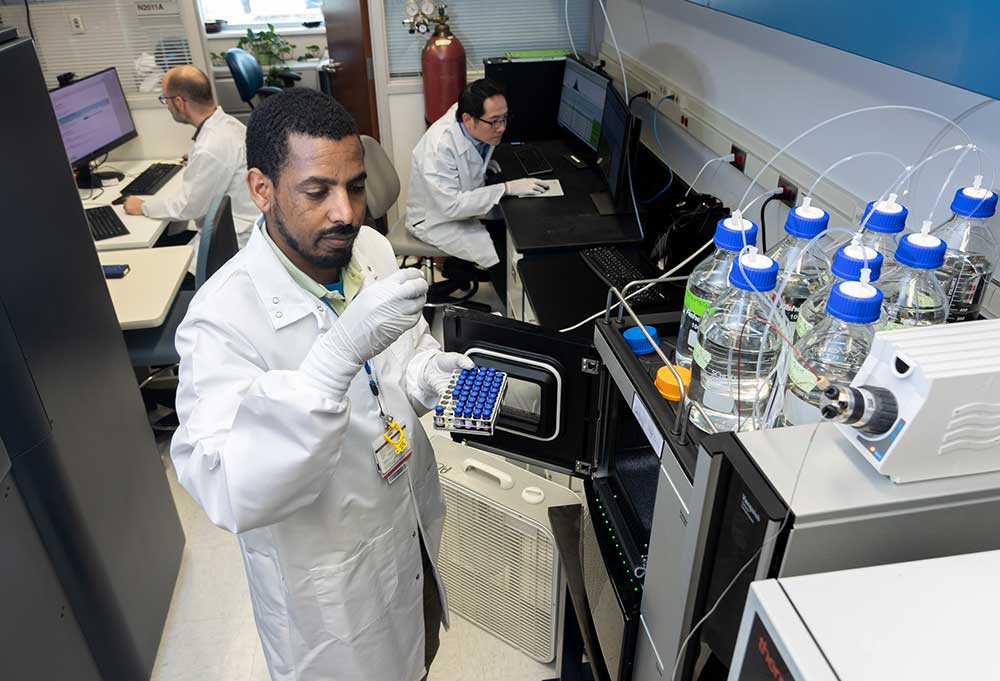
Dr. Stepan Melnyk, PhD, Laboratory Director for the Autism Metabolic Genomics Lab, offers an Oxidative Stress Core Laboratory equipped with state-of-the-art analytical instruments including HPLC-based Electrochemical Detectors, HPLC UV/Visual detectors, LC-MS, and Universal Detector Corona. The equipment can assist with the detection of proteins, lipids, carbohydrates, or small molecules associated with oxidative stress, providing excellent sensitivity, wide dynamic range, superior reproducibility, and a more consistent response. Dr. Melnyk is looking for opportunities to consolidate research institutionally, between institutions, or nationally known research centers. The equipment in this laboratory as well as the expertise of its staff provides advantages for beginning and established researchers to strengthen their grant applications. Currently and in past, the Oxidative Stress Core Laboratory provides significant support for numerous grants (NIH, DOD, CUMG) by successfully performing analysis of multiple markers of oxidative stress and transmethylation pathway metabolites. To discuss your interest with Dr. Melnyk, contact him at 364-4659 or 364-4534.
Need Assistance But Don’t Know Who to Call at ACHRI?
If you have questions while considering or conducting research at ACHRI or ACH but aren’t sure who to contact, call our office at 364-7373. Our staff will be glad to help you or to connect you with the person that can help. Please check out our revised administrative staff directory on the web (http://achri.archildrens.org/staff.htm). The directory now includes descriptions of services offered by ACHRI staff.
ACHRI Address Change
With the dedication of Children’s Way (formerly Marshall Street), ACHRI has a new street address: 13 Children’s Way. Use this address on grant applications submitted through ACHRI. Refer to the sample SF 424 with ACHRI information at our Web site to view the change for NIH submissions.
Also, don't forget to update your study consent forms and other research-related documents (and any templates) that may contain the old address as you make new submissions to the IRB.
|